Author: Lino Arci
Should You Retire in Vaughan or Toronto?
Posted on Oct 21, 2026 / Posted in Lifestyle

As your working days draw to a close, you may start to wonder if it’s also time to downsize your home. This path leads to a series of decisions to make, starting with: where should you go next?
There is great news if your choices are between Vaughan and Toronto. Both are fantastic places to live in their own way, but they are very different in terms of lifestyle. Which is the best fit for your retirement years? Keep reading for some answers!
What Is the Difference between Vaughan and Toronto?
Some non-locals are under the misconception that Vaughan is actually part of Toronto. The confusion is understandable.
Toronto is Ontario’s biggest metropolis, with six massive suburbs and a total population of more than 3 million! Vaughan, however, is its own separate city, although it is still part of the GTA. The latest census estimates a population of nearly 341,000. That’s substantial, but nothing compared to Toronto!
Where Is Vaughan in Relation to Toronto?
If you’ve spent the day in Toronto’s West End, perhaps visiting High Park or sipping a coffee in Roncesvalles, travelling almost directly north via Highway 400 will take you to Vaughan. The two cities share a border, but that is where (most) of the similarities end.
Each location could make downsizing feel like the best choice you ever made. Your final decision comes down to what your vision for your future looks like.
Once you’ve decided to proceed with downsizing, the next question is how. Find answers in the posts below.
- How to Purge Your Home Before Selling It
- 3 Things Seniors Should Know Before They Sell Their Home
- Choosing the Right Real Estate Agent as a Senior
Is Vaughan Better Than Toronto?
The boxing gloves are about to come off right about now! If you’re asking us which is our favourite, the answer is Vaughan, hands down. We love working here almost as much as we love living here!
If you ask a Toronto resident, they might roll their eyes and say, “Vaughan? Where is that?” Don’t be fooled. They know exactly where Vaughan is. We bet that nearly every single person in Toronto has been to Canada’s Wonderland or Vaughan Mills at least once!
Whether it is objectively better depends on the lifestyle you want to experience.
- If you want all the perks of the city, with less traffic and less noise, but with every convenience and fabulous entertainment, shopping, and dining, Vaughan is the perfect place to retire.
- If you love crowds and being in the middle of the excitement, then Toronto could be the city of your retirement dreams.
Loving Life and Nature in Vaughan
If you’re a retiree who plans to stay active and prefers to be outdoors nearly every waking moment, Vaughan definitely deserves your consideration. Not that Toronto is lacking when it comes to numerous parks and green spaces. It’s just that Vaughan takes the beauty of nature to the next level as the Greenbelt and Oak Ridges Moraine are environmentally protected areas.
Residents of all ages love basking in the forests and valleys of Boyd Conservation Park. As a popular spot for bird watching, hiking, picnicking, and geocaching, the trails and pathways are a great opportunity to meet up with fellow outdoor enthusiasts.
At the Kortright Centre for Conservation, nature’s beauty and innovation meet! Along your stroll, you’ll get a chance to see the windmill and wind turbine in action, as well as take in displays of solar shingles and more. You can also stock up on Canadian-made maple syrup and other maple-inspired goodies during your visit.
One of the nice things about Vaughan for seniors is the number of parks and paths that are relatively accessible, with paved trails making it possible to enjoy peaceful scenery in comfort and at your own pace. Sonoma Heights, Rainbow Creek, and Riverwalk are just a few favourites.
As we mentioned, Toronto also boasts plenty of green spaces and parks. If you visit at the right time and during the slower season, you might enjoy a relaxing stroll. These areas are picturesque, but can be extremely busy at times.
If you like being part of the hustle and bustle, you may very well enjoy living in Toronto.
If you’d prefer your downtime to be a little more tranquil, then Vaughan is the location for you.
Did you know that Vaughan is a paradise for golfers? Learn more in Private Golf Courses in Vaughan Ontario.
A Question of Transit
Car dependency is an area of consideration that can be easy to overlook when deciding on a location. Upon retirement, many people would love to hang up the keys and never drive again.
Others prefer the convenience and freedom of having a car. The good news is that both cities have excellent transit systems. However, Toronto definitely takes the win in this aspect. With an expansive network of streetcars, buses, subways, and GO Transit lines, it’s arguably the easiest city to live in for those who don’t drive.
Vaughan also features GO Stations at Maple, Rutherford, and Langstaff, as well as several bus lines. It’s also the only urban centre in the GTA outside of Toronto that offers subway access. From Vaughan Metropolitan Centre, you can reach Union Station in as little as 45 minutes.
If you’re the type of retiree who would prefer to drive instead, Vaughan could be the better choice. Wider streets and modern infrastructure make it less stressful to travel by car; plus, parking is widely available and often free. Traffic can be heavy during certain times of the day, but it’s a breeze compared to the constant gridlock you’ll face in Toronto.
Are you planning to buy a smaller home when downsizing? Here are some resources that may be helpful:
What Will Your Retirement Dream Home Look Like?
Real estate in Vaughan and Toronto can both be expensive, whether you decide to rent or buy your home. That said, the cost of living overall tends to be higher in Toronto, where you often get less square footage and older buildings that can require more maintenance.
Older homes can definitely have some appeal, however, especially for a home buyer who loves the look and character of classic architecture.
Many housing options in Vaughan tend to be newer, with modern attributes like bright open-concept layouts, huge windows, and high energy efficiency. Whatever you decide, it’s reassuring to know how many fantastic options are available to you.
The Lino Arci Team is Here to Help
If you’re thinking of retiring and still ironing out the details, our Vaughan real estate experts here at Lino Arci know both cities like the back of our hands. We are happy to help you find your path and are here to support you at every stage in the journey, from selling your existing property to getting the keys to your dream retirement home.
Do you have questions about how or where to downsize? Our team is proud to offer industry-leading support for our clients. Call 416-571-2724 to get in touch or email us at info@arciteam.com.

Interested in Learning More?
Reach out by using the form below, call us here, or email us here today.
"*" indicates required fields



What Do Home Buyers Look For?
Posted on Sep 29, 2026 / Posted in Homeowners

Right now, Greater Toronto Area real estate is in a unique spot. As inventory levels remain high, buyers have the opportunity to be more selective in finding a home. This dynamic has inspired new trends that are relevant both to fellow buyers and anyone looking to sell their house.
As one of the top real estate teams in the GTA, we work closely with buyers of all backgrounds, providing unmatched insight into what’s driving the market forward.
In this blog post, we’ll explore what today’s buyers are looking for in a new house and why that matters to you as either a buyer or seller.
Searching for a great home in the GTA?
Explore our featured listings.
Approaching the Market
Most buyers have a strong understanding of their individual needs and budget before they enter the market. Their list of must-haves, paired with their real estate agent’s advice, helps them search for their dream home efficiently and confidently.
However, there once was a time when buyers could expect to sacrifice certain wants or stretch their financial resources just to land a house. Today, they’re able to be a little more particular.
Thinking about buying a home? Check out these related blogs next!
- What’s the Average Down Payment on a House in Ontario?
- How to Budget for Buying a Home
- Here’s How to Write a Winning Offer Letter
What Buyers Want
So, what are buyers looking for right now? Although every buyer is ultimately different, there are certain trends that stand out.
Good Neighbourhoods (And Schools)
One of the biggest buyer-wants isn’t a specific in-home feature but rather a key aspect of what makes a house a home: location.
Now more than ever, buyers of all demographics understand the importance of choosing the right neighbourhood. From the local atmosphere and essential amenities to commuting, municipal programs, and more, community plays an important role in everyday life.
Families in particular not only want a great neighbourhood in terms of environment, but they also want to be close to top schools.
Turnkey Functionality
Today’s buyers understand that they are making a long term investment. While house prices and the cost of borrowing have not outright plummeted, buyers are able to gain leverage through greater inventory access. This means not settling for a run down or low quality property.
Right now, many buyers are searching for a house that is turnkey and move-in ready. They don’t want to make major renovations before moving in if they don’t have to.
As an extension of this, 99% of buyers today are choosing to include a home inspection condition in their offer. With reduced competition from other buyers, they’re able to be more diligent in verifying the property’s overall condition.
Room to Grow
Buyers’ long term outlook isn’t only financial. They also want a house that can adapt to their needs as time passes. For families, this means having room to grow.
Features like an extra bedroom, dedicated storage spaces, and finished basements are appealing to a wide range of buyers (especially those with little ones).
Renovation Potential (Upsizers)
As real estate agents, we always talk about the buyer audience. Every buyer is different and will want different things based on their specific circumstances. While some buyers want a property that is already turnkey or naturally adaptable, others may have a specific vision that involves renovations.
For example, some buyers may look for a house that they can easily add a basement or secondary suite to, using their property to generate passive income.
What Should Home Sellers Know?
Let’s talk about why buyer-wants are important to home sellers. It all connects back to inventory.
Right now, buyers have a lot to choose from. So, if you’re hoping to sell your house for the most money possible, you’ll need to ensure it stands out from the dozens (or even hundreds) of similar properties in your area.
An experienced real estate agent can analyze your home and help you tailor it to the most opportune buying audience. This includes everything from cleaning and decluttering to renovation projects, professional staging, and more.
Searching for more tips on selling a house? You’ll find plenty of advice in these related blog posts!
- How to Purge Your Home Before Selling It
- How Much Can I Sell My House For?
- What Adds Value to a House?
Make Your Move With Lino Arci
Whether you’re looking to buy a house, sell one, or both, no choice is more important than your real estate agent. In a complex, always-changing real estate market like the Greater Toronto Area, your Realtor can be the difference between a smooth transition and a rough one.
That’s where we come in. As Vaughan’s top real estate team, we’ve been helping local buyers and sellers for close to 40 years. We know what it takes to provide a seamless experience while getting you the best results possible. We guarantee it.
Buying or selling? We Can Help! Call 416-571-2724 or send an email to info@arciteam.com today!
Interested in Learning More?
Reach out by using the form below, call us here, or email us here today.
"*" indicates required fields


Discount Realtors: Are They Worth It?
Posted on Sep 14, 2026 / Posted in Selling

There are close to 70,000 real estate agents in Greater Toronto, some of whom advertise themselves as “discount agents” or “1% agents” (because they charge a 1% commission rate). On paper, this may seem like an exciting proposition, but it comes at a cost.
If you’re selling your house in today’s market, working with a cheap or low cost real estate agent means a major risk of leaving money on the table. Instead, the best way to maximize your net returns is by doing things the right way, i.e. choosing the right Realtor for the job.
As a multi-generational real estate team that’s been in business for more than four decades, we’ve seen a lot of trends come and go. In this blog post, we’ll explore the risks and trade offs that come with hiring a discount real estate agent, and other home selling insights you need to know.
Our team has sold thousands of GTA homes.
Learn more about our approach to selling
Understanding the Role of a Real Estate Agent
If you’ve never sold a house before (or it’s been a while), you may not have a full grasp of an agent’s role and why it’s so important.
Hiring a Realtor isn’t just some item on a checklist. It’s arguably the most influential detail in your home sale. On top of guiding you through the often complex listing process, it’s an agent’s job to get your house sold. And in today’s market, that’s easier said than done.
Sellers no longer have the upper hand in GTA real estate. Rather than waiting for buyers to come to you, accomplishing a high result home sale requires insider knowledge and proven strategies. That’s where your agent makes all the difference.
Selling your house? Explore these related blogs for more advice!
- Will I Be Able to Sell My Home For The Full Asking Price?
- How Long Does it Take to Sell a House?
- Why You Need to Price Your Home Strategically
What Should a Realtor Cost?
Like any high-skilled profession, Realtors’ services come at a cost, typically a predetermined commission rate applied to the final sale price of your home. So, what does the average agent charge in commission?
In Ontario, Realtor commission rates can vary somewhat widely, with most agents charging somewhere between 3% and 8%. This may sound like a big gap, but there’s a reason for it.
Agents don’t pick their commission rates at random. Rather, their costs directly reflect the level of service they provide. Just like a house, a great real estate agent is an investment. You get back what you put in.
What’s the Deal With Discount Agents?
Outside of the average range for Realtor fees, there are a few agents out there who charge an ultra low rate of 1% or 2%. This may sound enticing at first, but it’s not all upside.
Remember, an agent’s commission is a reflection of their approach. If someone is charging a discounted rate, there’s usually a reason for it.
A 1% commission agent won’t be investing the same amount of time, effort and resources into your listing compared to an average agent (let alone the top professionals in your area). Cutting corners in this way can negatively impact your sale in more ways than one.
Not only could your house take longer to sell, but you could also be leaving some serious money on the table. In fact, there’s a good chance that the returns you miss out on would be greater than the money you save by hiring a low cost agent in the first place.
On the hunt for more home selling tips? Check out these other blog posts!
- How Much Can I Sell My House For?
- What to Look For in a Listing Agreement
- The Top 5 Common Mistakes Home Sellers Make
What Working With a Top Agent Looks Like
Now that we’ve talked about the dangers of hiring a discount real estate agent, let’s look at the flip side of the coin: what you get when you work with the best possible Realtor.
At the Lino Arci Team, we believe in selling houses the right way. Having perfected the selling process over more than 40 years, our results speak for themselves.
Not only are we Vaughan, Ontario’s number one team in terms of sales production, but our listings sell four times faster than the average agent.
When you work with us, you enjoy a low stress, completely personalized experience. We’ll guide you through the entire process from start to finish, taking every opportunity to maximize your odds of a fast, top dollar sale.
Sell Your House With Lino Arci
Only a top market leading agent can help you sell quickly and for the best price possible. That’s where we come in. Get in touch with us today to learn more about our approach to selling and how we can help you reach your goals.
Selling your house? We’re here to help.
Call us at 416-571-2724 or email info@arciteam.com to get started.
Interested in Learning More?
Reach out by using the form below, call us here, or email us here today.
"*" indicates required fields

Is Downsizing Worth It?
Posted on Aug 27, 2026 / Posted in Homeowners

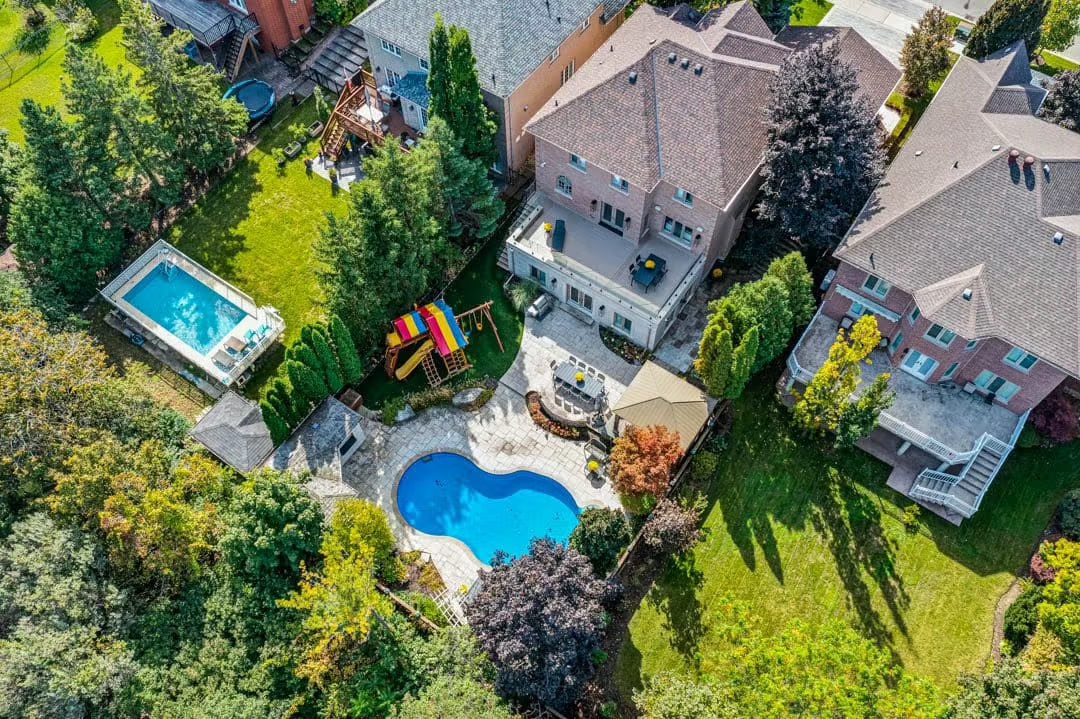
Few things are more challenging than selling your long-time family home filled with years of memories. It’s a completely different experience than when you bought your house in the first place. In many ways, downsizing is an even bigger, more life-changing decision, and certainly not one that you will make lightly.
The constant question at the back of your mind is whether or not downsizing and buying a smaller home is worth it, or if it’s better to stay where you are for now. In this post, we’ll go over a few of the pros and cons of simplifying your life by downsizing.
Moving on to a new chapter? Read our Ultimate Guide to Downsizing Your Home.
Pro and Con # 1: You Will Have to Declutter
One of the first steps to downsizing your home is going through everything you have and deciding what to keep, donate, sell, or discard. It’s a time-consuming process, to say the least. Many of us have accumulated belongings over the years that we have completely forgotten about or never even used.
Letting go of simple, practical items with no emotional attachment is the easy part; you just have to set aside the time to get organized. Sorting through sentimental belongings is a different story.
These are called “keepsakes” for a reason – because you never want to part with them. However, you can’t take everything when moving to a smaller space, and you’ll have to prioritize your most important items while getting rid of almost everything else.
Decluttering can be overwhelming in so many ways. That is why we’ve placed it at the top of the list of disadvantages.
Once the task is complete, however, your house will seem so spacious and free, which is also why it’s the number one advantage! Even if you decide to stay where you are for the foreseeable future, going through your home and sorting your belongings is a worthy endeavour.
Have you decided to go through with downsizing your home? Here are some more resources that can help:
- How to Purge Your Home Before Selling It
- 3 Things Seniors Should Know Before They Sell Their Home
- How to Help Your Parents Declutter
Pro # 2: You Can Free Up Your Equity
Selling a larger family home in favour of renting or buying a smaller place offers significant financial advantages. Real estate values have risen substantially over the last two decades. If you originally purchased your property 10 or more years ago, your equity and purchasing power have also grown.
Downsizing can mean a higher quality of life during your retirement years, allowing you to pursue hobbies, travel, or create even more memories with your loved ones. Depending on how much equity you have built over the years, downsizing could potentially allow for an earlier retirement than you thought possible.
Con # 2: You Might Miss Your Home
Some people move on to their next phase with excitement and anticipation and never look back. Other homeowners will struggle a little more. The more drastic the change, the more time it can take to become accustomed to a different space.
Starting over can be an exciting chapter, but it is completely normal to miss your old home, at least for a while. Once you get settled, you can get to know your neighbours while inviting long-time friends and family members to enjoy your new home and neighbourhood. When that happens, you can honour your past memories while looking forward to future experiences.
A smaller home or a condo isn’t your only downsizing solution! This could also be your opportunity to leave winter behind and enjoy a sunny destination. Learn more in 5 Steps to Becoming a Snowbird.
Pro # 3: You’ll Have More Time and Money
Downsizing your home means more than living in a smaller space; it creates a convenient, more carefree lifestyle. Gone are the days when you’d wake up and think about that long list of maintenance. You no longer have what seems like acres of grass to cut or trees to trim.
A smaller house also means spending less time cleaning and more time on what you want to do. Perhaps you’ll lose yourself in that book series you were always too busy for, and maybe those funds that were set aside for repairs can go to that all-inclusive vacation you always wanted.
Thinking about your next steps and where you should live once your house sells? The posts below can help you plan:
- Can Downsizing Really Make My Life Easier?
- What to Look For in a New Home if You’re Retired
- Are Condos Good for Seniors?
Con # 3: Moving Is a Lot of Work
Ultimately, the question of downsizing depends on the person. You may not quite be ready to give up your existing home just yet, and that is perfectly okay. The key is in deciding when, if, and how you will embark on this journey, on your own terms and on your own schedule.
Whether you’re on the fence about a smaller place or you are already packed and eager to go, there’s no question that moving can be a lot of work. It starts with preparing your existing house for sale in a way that maximizes your results. At the same time, you’re on the hunt for the right home to move into once yours sells.
This process involves intense cleaning, organizing, and often, some heavy lifting. However, there is also good news! An experienced, full-service real estate team will do more for you than negotiate the terms of your sale and purchase. The Lino Arci Team can arrange for everything from cleaning and decluttering to home staging, moving, repairs and renovations, and unpacking.
When you’re ready, we are here to give you our undivided attention and provide unparalleled service to make every aspect of your move stress-free and even enjoyable.
Do you have more questions about downsizing?
Our team is proud to offer industry-leading support for our clients. Call 416-571-2724 to get in touch or email us at info@arciteam.com.
Interested in Learning More?
Reach out by using the form below, call us here, or email us here today.
"*" indicates required fields


What Do Home Inspectors Look For?
Posted on Aug 12, 2026 / Posted in Homeowners

If you’re about to buy or sell a house, there will very likely be a home inspection in your future.
Inspections are an important part of real estate transactions, protecting both buyers and sellers from costly issues, delays, and other stressful situations.
If you’ve got a move coming up, it’s important to understand how home inspections work, what they cover, and just as importantly, what they don’t.
Let’s take a closer look at what home inspectors look for and other ways to protect your interests as a buyer or seller.
Searching for your dream home?
Explore our featured listings.
What is a Home Inspection?
A home inspection is very much what it sounds like: a professional specialist (called an Inspector) performs an in depth examination and assessment of a particular property.
In the context of either buying or selling a home, there are two main types of home inspection.
First, there’s the pre-purchase home inspection. By far the more common of the two, it’s more or less a standard element of all real estate transactions in today’s market (although some buyers may decide not to include an inspection condition when facing competing offers).
This type of inspection happens after a buyer’s offer has been conditionally accepted, allowing them to have the property professionally inspected before the deal closes.
A pre-listing home inspection, on the other hand, is a little different. This is when a homeowner decides to proactively have their property inspected before officially listing it for sale. In some cases, a seller may suspect their house has hidden issues that they’d rather address in advance, rather than facing setbacks or issues later on.
Thinking about buying a home? Check out these related blogs next!
- How to Buy a House Before Selling Yours
- What’s the Average Down Payment on a House in Ontario?
- First Time Home Buyer Checklist
What Does a Home Inspection Include?
A home inspector’s checklist includes a range of important elements related to the house’s condition, functionality, and comfort. While their analysis is largely visual, they may perform basic physical tests if needed. So what does a home inspector check?
Outside the House
- Foundation
- Exterior Walls (Siding)
- Exterior Doors and Windows
- Decks and Patios
- Drainage Systems
- Exterior Ventilation
- Roof
Inside the House
- The Attic
- Electrical Systems
- Heating and Cooling Systems
- Insulation Materials (if immediately visible)
- Interior Ceiling, Floors, and Walls
- Interior Ventilation
- Plumbing
What a Home Inspection Doesn’t Cover
Home inspections cover the most important structural and systemic aspects of a house, but they’re not completely bulletproof. It’s simply not practical or possible for an inspector to analyze every square inch of a house before it’s bought or sold. So, what’s left off of an inspector’s checklist?
Invasive Investigations
Home inspectors don’t tamper with a home’s walls or floors unless specifically requested. As a result, there could be issues hiding behind a wall or below the floorboards that aren’t outlined on your inspection report.
This is where your real estate agent’s knowledge can be a protective asset. Considering certain details about the property (age, builder, condition, previous renovations), they can assess risk and anticipate potential problems without invasive investigation.
Toxins or Environmental Risks
Hazardous materials are another thing inspectors don’t fully probe. Homes today are built using safe, non-toxic materials. However, it wasn’t always this way.
Problematic materials like asbestos and lead paint can still be found in some older properties. If not addressed or fixed, they can pose legitimate risks to your health (and property value).
Although they don’t dedicate a specific portion of their report to toxins or environmental hazards, most inspectors will acknowledge any obvious or immediately visible issues like mould or pest droppings should they encounter them incidentally.
How Long Does a Home Inspection Take?
Every property is unique and therefore, every inspection process looks a little different. Inspecting a condo, for example, wouldn’t typically take as long as a 3,000 square foot 3-storey house.
That said, home inspections rarely take a full day to complete. On average, your typical inspection is anywhere from two to four hours depending on the house itself.
Searching for more home-selling advice? Consider these other posts from our blog.
- What Adds Value to a House?
- Questions to Ask Your Vaughan Real Estate Agent Before Selling
- What to Look For in a Listing Agreement
Realize Your Real Estate Goals With Lino Arci
If you’re thinking about buying or selling real estate in the Greater Toronto Area, partner with Vaughan’s number one real estate team: the Lino Arci Team. With decades of experience and thousands of real estate deals under our belt, we have the strategies and expertise to help you exceed your goals.
Buying or selling? We Can Help! Call 416-571-2724 or send an email to info@arciteam.com today!
Interested in Learning More?
Reach out by using the form below, call us here, or email us here today.
"*" indicates required fields

5 Things to Do Before Selling a Deceased Parent’s Home
Posted on Jul 29, 2026 / Posted in Selling

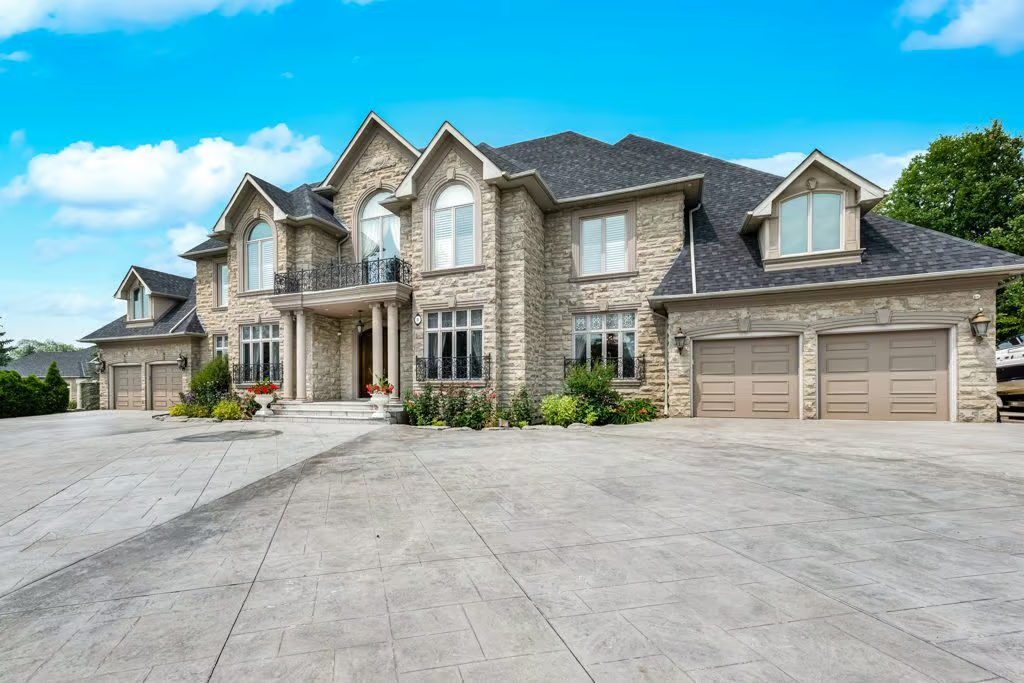
Selling your parent’s house after they’ve passed away isn’t easy. Not only are you organizing an entire home sale from start to finish, but there are a handful of other variables to navigate too, like executorship, estate management, and coordinating with family members. On top of all that, it can also be an emotional experience.
As real estate agents who’ve helped countless families through this exact circumstance, we’re here to share some of our knowledge with you.
In this blog post, we’ll look at five things you’ll need to do before you sell a deceased parent’s house.
1. Talk to a Lawyer
Even if you’re a direct family member or next of kin, you can’t sell your parent’s house without legal authority. Before you do anything else, talk to a lawyer. They’ll review all relevant documentation to determine the legal status of the property and who can sell it as an asset within the estate.
If necessary, they’ll walk you through the required processes (such as probate) so that you’re able to sell the property without setbacks or penalties.
What to Know About Probate
Depending on the details of your parent’s Will, you may need to follow a process called probate in which the Court confirms you as an estate trustee. Luckily, the basic steps of probate are pretty simple. However, there are important aspects of the process that you should know about in advance.
Most importantly, probate takes time (sometimes several weeks to months), and you can’t finalize the sale until it’s been completed. You’ll want to get started on probate early.
There’s also a processing fee involved in probate. Known as the Estate Administration Tax, it can add up to thousands of dollars.
Selling another person’s house on their behalf? Check out these blog posts next!
2. Know Who Will Be Involved
If there are any other individuals (siblings, relatives, etc.) who would like to assist with the sale of your parent’s house either formally or informally, you’ll want to start communicating as early as possible. An estate sale can be a lot of work; however, things will start to move quickly once you get the ball rolling.
Navigating a collaborative home sale during an emotional time can be, well, emotional. Maintaining an open dialogue and clearly defining everyone’s roles and responsibilities can reduce the odds of misunderstandings, interpersonal disagreements, and other challenges.
On that note, keep a record of all financial, legal, and real estate processes. This includes property appraisals, inspections, carrying costs (like utilities and insurance), home improvements, and property and estate taxes. Even if everyone trusts each other, having up-to-date documentation ensures interests are protected.
3. Hire a Real Estate Agent
The next thing you need to do before you can sell someone’s home after they’ve passed away is hire a real estate agent.
Hiring a real estate agent isn’t just a standard procedure. It is the biggest difference maker in your sale. Your choice of Realtor will directly impact how much you’re able to sell for, how quickly, and how easy (or not so easy) your experience is. So, what makes a good agent?
First, you’ll want to work with someone who has years, if not decades, of professional experience. The more market conditions they have worked under, the better.
Next, search for a real estate agent who has specifically sold homes close to your parents’ home. These hyperlocal insights will influence how the agent prices, advertises, and negotiates on the property.
Along with a strong track record of selling homes, choose an agent who has specific experience with estate sales. Their familiarity with the legal and personal aspects of these transactions will be immensely beneficial as you manage the sale of your deceased parent’s home. A full-service agent can also look after other aspects of the sale like decluttering or working with contractors on your behalf.
4. Prepare the Property For Sale
Selling a parent’s house after they’ve passed away can be stressful, and you may feel tempted to list the property as-is just so you can get it over with.
While this might seem like the fast and easy option, it can mean leaving serious money on the table. Ironically, it can also cause the house to stay on the market for longer.
Follow your agent’s guidance on effectively preparing the house for the market. They’ll let you know which steps are totally necessary, and which strategies can add extra value.
Helping your parents sell their house? Read these blog posts next!
- Are Condos Good For Seniors?
- How to Purge Your Home Before Selling It
- 3 Things Seniors Should Know Before They Sell Their Home
- How to Help Your Parents Declutter
5. Call The Lino Arci Team
If you’re searching for a compassionate, full-service real estate team who can help you sell your parents’ house, look no further than us, The Lino Arci Team.
As Vaughan, Ontario’s number one real estate team, we have the experience and strategies to help you sell quickly and for top dollar. On top of ensuring you enjoy a smooth, low-stress experience, your results are backed up by our Sold Guarantee and 100% of Asking Price Guarantee.
Need help with an estate sale? Our team is proud to offer industry-leading support for our clients. Call 416-571-2724 to get in touch or email us at info@arciteam.com.
Interested in Learning More?
Reach out by using the form below, call us here, or email us here today.
"*" indicates required fields


Are Condos Good For Seniors?
Posted on Jul 14, 2026 / Posted in Lifestyle

One of the hardest yet most important aspects of downsizing your home is deciding where you want to live next. As a senior, you’ve got a lot of options, and deciding which route works best for you will require some thought.
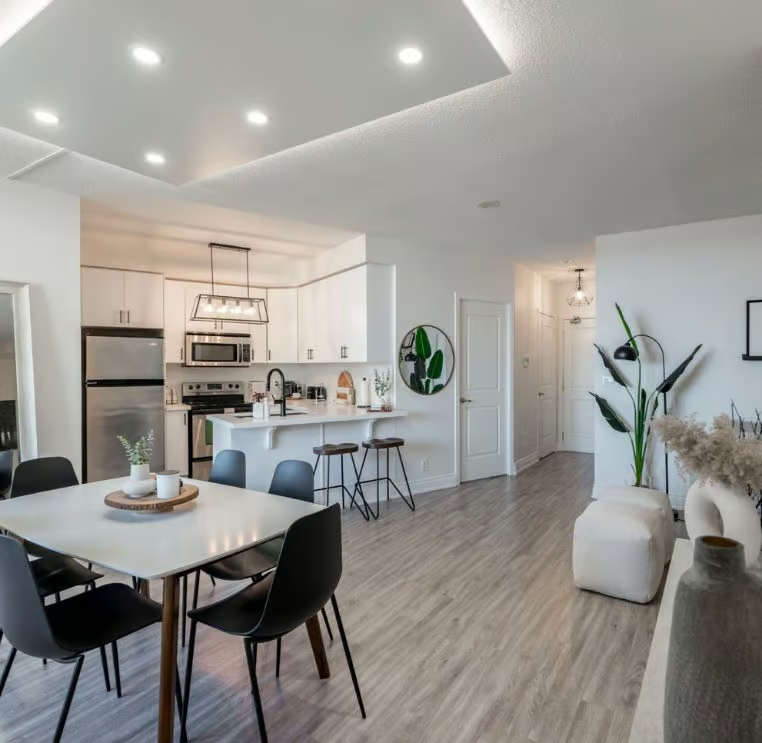
Today, many seniors are trading out their multi-story homes for sensible condos, and for good reason. Condos offer a benefit-rich lifestyle and easy-to-manage costs, making them a great fit for most seniors.
However, there are a few potential drawbacks to condo living that seniors should consider before making a decision.
In this blog post, we’ll cover the pros and cons of living in a condo as a senior and everything else you need to know to enjoy a smooth downsizing journey.
Why Seniors Love Condos
Condos are typically built for a wide variety of buyers and families. However, the unique properties of condo living tend to complement the needs of seniors especially well.
Let’s explore some of the specific reasons why condos are great for seniors.
It’s Low (or No) Maintenance
One of the biggest perks of living in a condo is that it requires little to no maintenance. Seniors can wave goodbye to things like yard work, shovelling snow, interior and exterior home repairs, and other responsibilities. These chores are all taken care of by the condo’s maintenance team.
As a senior, living in a condo means you get more time and energy back in your pocket.
Condos Are More Accessible
Accessibility is often a priority for seniors, and it’s an area where condos often outshine detached homes. In a condo, everything is close by (and on one floor). You won’t be going up and down stairs all day or walking long distances just to reach other rooms. Not only is this convenient, but it’s also much safer.
In the winter months, walking up an icy driveway or walkway can be dangerous. Most condos avoid this problem by offering underground parking with direct elevator access to your floor.
About to downsize? You may find these other blog posts helpful.
- How to Purge Your Home Before Selling It
- 3 Things Seniors Should Know Before They Sell Their Home
- How to Help Your Parents Declutter
New Chapter, New Community
Moving to a new home in a new area can feel nerve-wracking, and in some cases, isolating, especially as the new neighbour on the block. One nice part about living in a condo is that it can offer an instant sense of community. Seniors have the opportunity to build fast friendships as they meet and interact with neighbours around the building. This can make the process of transitioning to a new home and life chapter much easier and more enjoyable.
There’s Variety
Beyond the standard elements of condo life, every property has something different to offer its residents. This allows seniors to choose a condo that truly suits their ideal lifestyle.
When it comes to condos in the Greater Toronto Area, seniors have a lot of options to choose from.
What Are the Drawbacks?
Every type of housing has its pros and cons, and condos are no exception. So, what should seniors be aware of before they decide to buy a condo? Let’s look at a few special considerations.
It’s a Smaller Space
Most seniors are actively looking to downsize their living space. This is part of what makes condos so appealing. However, it’s worth pointing out that moving from a full size house to a compact condo can be somewhat of an adjustment, especially if you have a lot of things.
For example, condos typically have limited on site storage. Depending on your needs, you may need to rent extra storage space at a nearby facility.
You Don’t Have Total Freedom
Another drawback of condos is that they come with rules (albeit not very many). You’ll still be able to use your condo unit as you like; however, you may run into restrictions regarding renovations, noise, amenity use, or other things.
Searching for more advice on downsizing your home? Read these blogs next!
- Choosing the Right Real Estate Agent as a Senior
- Downsizing After Retirement: Why it Works
- Can Downsizing Really Make My Life Easier?
Limited Privacy
Living in a condo means being part of a close-knit community. While this is a benefit for most seniors, the limited privacy (compared to a detached house) isn’t for everyone.
From occasional noise to encountering other residents in the hallway, elevator, or other shared spaces, the communal aspects of condos are a drawback for some.
Downsize With the Lino Arci Team
If you’re thinking about downsizing to a condo, you’ll want to work with a local real estate team who understands the unique needs of seniors. Like us, the Lino Arci Team.
From selling your current home to finding the perfect condo for your next chapter of life, we take a hands-on, full-service approach aimed at making your downsizing journey as smooth, successful, and risk-free as possible.
Ready to downsize? Our team is proud to offer industry-leading support for our clients. Call 416-571-2724 to get in touch or email us at info@arciteam.com.
Interested in Learning More?
Reach out by using the form below, call us here, or email us here today.
"*" indicates required fields