Author: Lino Arci
Private Golf Courses Near Vaughan
Posted on Jun 24, 2026 / Posted in Luxury

Vaughan, Ontario, is a premier destination for golf enthusiasts. A sport long synonymous with luxury, the city’s selection of prestigious courses exemplifies its draw to elite athletes, distinctive golf enthusiasts, and affluent home buyers.
Discover the top private golf courses near Vaughan, Ontario.
Searching for luxury properties in Vaughan? Explore our featured listings.
Luxury Living in Vaughan
Located just beyond the sprawl of metropolitan Toronto, Vaughan is a first choice destination among wealthy homebuyers in Ontario. Boasting exceptional communities, stunning luxury properties, and a vast range of upscale amenities, high end living in Vaughan leaves little to be desired.
In fact, many of the Greater Toronto Area’s most prominent residents call Vaughan home, including entertainment icons, professional athletes, politicians, and more. If you are seeking a refined, second to none lifestyle, Vaughan should be top of mind.
Searching for more luxury real estate resources? Consider these other posts from our blog.
- Why Vaughan is the Perfect Place to Buy a Luxury Home
- What Makes Luxury Real Estate Different?
- Everything You Need to Know About Living in a Gated Community
Private Golf Courses Near Vaughan
Vaughan’s affluent profile offers countless benefits to residents, including proximity to some of the best-rated golf courses in North America. Beyond exceptional course design in a refined atmosphere, these clubs offer close-knit social dynamics, beautiful clubhouses, fine dining, world class fitness facilities, and more.
Some of the most revered private courses in the area include:
The Thornhill Club
Boasting more than a century of history, The Thornhill Club remains one of Canada’s most storied and respected golf courses.
The club’s 18-hole championship course was designed by legendary golf architect Stanley Thompson in 1922. Since then, it has hosted several high prestige events, including the PGA Canadian Open. Members also have access to The Thornhill Club’s 9-hole “executive” valley course, which provides an easier, more laid back experience.
While the club accepts new applicants, membership remains limited, preserving the club’s exclusive profile.
Bayview Golf & Country Club
Offering a holistic, community-oriented experience, Bayview Golf and Country Club provides immaculate course facilities among a wide range of social and fitness amenities.
Bayview’s 18-hole course was plotted by Canadian Golf Hall of Fame member Robbie Robinson and is enjoyable for members of all skill levels. On-site golf simulators, along with an 8000 square foot outdoor practice facility, allow golfers to enhance and perfect their game.
Maple Downs Golf and Country Club
Maple Downs Golf and Country Club is located just outside of Vaughan in Maple, Ontario. For more than 7 decades, Maple Downs has been celebrated for its welcoming environment and highly dynamic course, including Maple Down’s trademark elevation changes and rolling fairways.
Passionate about developing the next generation of golfers, Maple Down’s Head Teaching Professional is Brad Kerfoot, winner of the 2014 PGA of Ontario Tour Championship and Player of the Year award.
Off the links, Maple Downs members also have access to world class racquet facilities, including two newly surfaced tennis courts and a half dozen pickleball courts.
National Golf Club of Canada
Long ranking as Canada’s top private golf club and one of Golf Digest’s Top 100 in the world, The National truly represents the summit of North American golf. Located in Vaughan’s historic Woodbridge community, the course’s reputation is known around the world.
In addition to developing some of Canada’s top golf professionals, The National has received countless accolades for its stunning design and topography. Offering a varied, carefully planned experience, no two holes on the 18-hole course are alike. It is known to be challenging, engaging, and truly unrivalled.
The National’s remodelled clubhouse is rich with amenities, including lockers for members and guests, a full service dining room, and state of the art training facilities.
Planning to sell your luxury home? Explore these related resources for important information.
Beacon Hall Golf Club
Located a short distance from Vaughan in Aurora, Ontario, Beacon Hall Golf Club ranks as one of Ontario’s most exclusive private golf courses. Designed by Bob Cupp (Jack Nicklaus’ senior designer at Glen Abbey), the club’s 18-hole championship course is truly spectacular, described as challenging yet visually breathtaking.
A close knit club of only 260 shareholder members, Beacon Hall’s limited enrollment ensures a consistent five star experience. Notably, members benefit from open tee privileges, meaning pre-booked tee times are never required.
Your Link to Luxury Real Estate
Searching for an exceptional luxury home and community near Vaughan, Ontario? Work with the Lino Arci Team.
As Vaughan’s preeminent luxury real estate group, we’re especially tapped into the Greater Toronto Area’s most high-profile luxury neighbourhoods, including gated communities and sought-after new developments. Using this expertise to your advantage, we leave no avenue unexplored in finding your perfect home.
Discover your perfect luxury home. Reach out today at 416-571-2724 or email info@arciteam.com to reach our team.

Interested in Learning More?
Reach out by using the form below, call us here, or email us here today.
"*" indicates required fields


What Adds Value to a House?
Posted on Jun 11, 2026 / Posted in Selling

If you’re thinking about selling your house in the near future (or even a few years down the line), you’ve probably considered making a few changes to increase its market value. That’s great.
As real estate agents ourselves, we’re passionate about helping sellers get the absolute best price for their house.
In this blog post, we’ll touch on what influences property values in the Greater Toronto Area, and what you can do to add value to your house. Let’s get started.
Understanding How Market Value Works
Value is an intricate metric in real estate. Everyone wants their house to be valuable, but how is that actually measured? Here’s the thing: your home doesn’t have a pre-set or objective “market value”. In practice, your home is worth whatever today’s buyers are willing to pay for it.
With all that in mind, the most effective way to increase your home’s value is to make it as appealing to potential buyers as possible. Luckily, there’s no shortage of strategies for doing exactly that.
Searching for more home-selling advice? Consider these other posts from our blog.
- Questions to Ask Your Vaughan Real Estate Agent Before Selling
- A Seller’s Guide to Multiple Offers
- What to Look For in a Listing Agreement
The Big Moves
If you’re looking to increase your home’s value in a big way, certain renovations can be an effective way to do that.
For example, building a dedicated home office can make your property more appealing to buyers who work from home on a part-time or full-time basis. It can also make your home more functional in the short term.
Another major renovation with high ROI potential is the addition of a dedicated secondary suite. Buyers will be enticed by the opportunity to earn passive income, which can then go towards their mortgage.
Smart home integrations like entertainment systems, climate control devices, customizable lighting and security solutions can also add great value.
These projects will involve some degree of upfront investment, but they can prove profitable when done right.
Small Changes With Strong ROI
On top of larger home renovations, there are plenty of small, somewhat subtle changes that can also add value to your home. In fact, some of these techniques can bring better ROI than major improvement projects.
For example, adding a fresh coat of paint to key areas in your home (kitchen, living room, master bedroom) can make your house feel new and contemporary. If the exterior of your home could also use some TLC, repainting it can also boost value nicely.
Upgrading lighting fixtures and swapping in new lightbulbs also elevates your home’s ambience, making it more appealing to potential buyers and increasing your odds of a top-dollar sale.
Home staging is another subtle tactic that can help you sell for more money. Studies show that staged homes routinely sell for more money compared to unstaged ones.
Know How to Price Properly
As a seller, you need to understand the importance of pricing. Remember, you’re looking to attract and entice as many qualified buyers as you can. Buyers respond to more than just the physical features of your home.
Today, most buyers in the Greater Toronto Area have a strict budget. So strict in fact, that they won’t even consider homes slightly outside of their price range.
If you choose to set your listing price on the high end, you risk alienating a large portion of your audience right away. However, if you start with an attractive, balanced asking price, you’ll maximize how many buyers discover your home.
Preparing to sell your home? Check out these helpful resources from our blog.
- 5 Common Mistakes Home Sellers Make
- Selling a Luxury Home: How to Get the Best Return
- How to Sell Your Home in a Hurry
The Right Agent
The items we’ve talked about so far are a great foundation for a high result home sale. However, the most effective way to add value to your house isn’t one specific renovation or upgrade; it’s choosing the right real estate agent.
Hiring an agent isn’t a formality; it can make or break every last detail of your sale, including how much you’re able to sell for. You’ll want to choose a professional who has a strong track record of selling properties for top dollar in your local area.
It’s also a good idea to talk to your agent before you make any changes to your house. They’ll help you decide which strategies will actually have a solid payoff based on your selling goals.
Sell Your Home With Lino Arci
Hoping to get the price possible for your home? The Lino Arci Team is your ticket to a great result. As Vaughan’s number one real estate team, we’re completely committed to helping you get the best results possible on your home sale.
Thanks to our decades of experience, we’ve got home selling down to a science and are confident that our proven selling process will help you get top dollar.
To learn how the Lino Arci Team can give you a risk-free selling experience, get in touch. Call our team at 416-571-2724 or email info@arciteam.com to get started.
Interested in Learning More?
Reach out by using the form below, call us here, or email us here today.
"*" indicates required fields


Selling a Luxury Home: How to Get the Best Return
Posted on May 15, 2026 / Posted in Luxury
Luxury homes are unique. In real estate, they belong to a separate market from traditional properties.
If you’re looking to sell your high-value home and want to maximize your final price, you’ll need to approach the market in a specific way.
Keep reading for tips on how to get the best return when selling your luxury home.
Searching for an incredible property? Explore our luxury real estate listings.
Understanding Luxury Home Buyers
The foundation of a smooth, high result home is understanding buyers. As a seller, you can optimize your home’s market performance by tailoring your listing to the unique tastes of your target audience (and knowing how to reach them). In the luxury realm, this sentiment is even more vital.
Affluent homeowners have specific needs, tastes, and resources. They also navigate real estate transactions differently than your typical house hunter. If you’re serious about maximizing your results, you’ll need to approach the market differently than you would with a traditional home sale.
Searching for more luxury real estate resources? Consider these other posts from our blog.
- Why Vaughan is the Perfect Place to Buy a Luxury Home
- What Makes Luxury Real Estate Different?
- Everything You Need to Know About Living in a Gated Community
The Most Essential Part of Selling a Luxury Home
Step one of selling your luxury home is to partner with a real estate agent who specializes directly in high-priced homes and affluent clientele. Your house is a substantial asset, and you’ll want to be sure that the outcome of your sale is in good hands.
Always research your options thoroughly and speak with multiple Realtors before deciding who to hire. You should look for a professional with a proven track record of selling mansions in your local market who is willing to create a bespoke action plan for your listing.
Creating a Tailored, Turn-Key Property
Elevating the results of your luxury home sale begins with strategic preparations. No matter what condition your property is in, certain adjustments can prove beneficial when it hits the market.
This is an area where your agent’s expertise will be essential. They will offer informed recommendations on which changes and strategies to implement to enhance value.
While every home is unique, most pre-listing steps fall into three larger categories:
- Cleaning
- Decluttering and depersonalization
- Repairs and renovations
After you’ve cleaned, decluttered, and addressed any necessary repairs, your home will be ready for staging. This process enhances your home’s ambience by creating a cohesive, emotionally engaging atmosphere that encourages motivated, high-value offers.
High Impact Marketing
Once you’ve perfectly shaped your home’s profile, it’s time to capture strong marketing assets such as photos and videos. Future buyers will likely see your home in some form of marketing before they see it in person, and you want to make a good first impression.
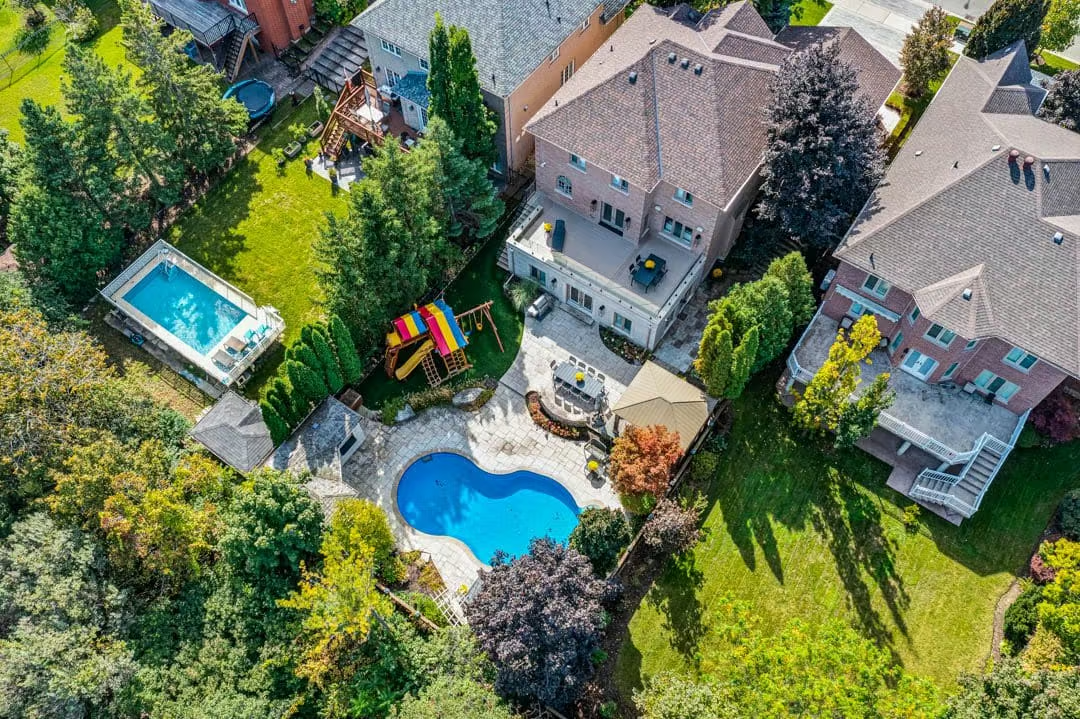
Marketing packages for luxury properties are more advanced than those for average homes (and they should be). Your agent will employ innovative tools like high-resolution drone imagery, 3D virtual tours, and other technologies to captivate and entice prospective buyers.
Planning to sell your luxury home? Explore these related resources for important information.
- What to Look For in a Listing Agreement
- Are Home Sold Guaranteed the Real Deal?
- Why Agent Feedback Matters When Selling Your Home
Exposing Your Home to a Global Market
Another nuance to selling a luxury house is reach. In the Greater Toronto Area, not all wealthy buyers are local. In fact, many are house hunting from across the world.
This is one more reason why you need to choose your Realtor carefully. In order to sell your home for the most money, it needs to be marketed both domestically and internationally.
Luxury-specialized agents will have a network of international contacts and can connect your home with a wide pool of elite buyers wherever they may be.
Sell Your Luxury Home With Lino Arci
Searching for a specialized, high-performance real estate agent to sell your luxury home? Look no further than the Lino Arci Team. Having sold mansions and luxury homes in Vaughan and the Greater Toronto Area for four decades, our refined selling strategies are second to none.
Beginning with an in-depth approach to market preparation, we create a bespoke action plan to ensure you get the best return possible on your property. You’ll also enjoy white-glove, client-centric service that eliminates the hassles of selling.
Our team holds exclusive affiliations with various luxury real estate tastemakers, including The Remax Collection, Who’s Who in Luxury Real Estate, and the Luxury Home Institute. With these connections, we’re able to maximize our listings’ international reach.
Finally, our luxury selling services are elevated by our exclusive CLHMS™ designation from the Luxury Home Institute. We ensure your home reaches as many qualified buyers as possible, wherever they may be.
Learn more about Lino Arci’s specialized approach to luxury real estate. Call our team at 416-571-2724 or email info@arciteam.com to get in touch.
Interested in Learning More?
Reach out by using the form below, call us here, or email us here today.
"*" indicates required fields


Best Vaughan Neighbourhoods For Commuters
Posted on May 11, 2026 / Posted in Community

Located just beyond Toronto’s outskirts, Vaughan, Ontario, is so much more than your average suburb. Home to great communities and schools, countless green spaces, and some of the top cultural, entertainment, and retail attractions in all of Ontario, there’s a lot to love about this welcoming city.
One of the primary drivers behind Vaughan’s growth is just how commuter-friendly the city is. Whether you’re driving or riding public transit, living in Vaughan makes it easy to travel around the Greater Toronto Area for work, school, or any other reason.
In this blog post, we’re highlighting a few Vaughan neighbourhoods that are a strong fit for home buyers who will be commuting to downtown Toronto regularly.
Vaughan Metropolitan Centre (VMC)
We’re kicking off this list with one of Vaughan’s most unique communities: Vaughan Metropolitan Centre, aka VMC. As the name suggests, this neighbourhood was redeveloped to serve as Vaughan’s urban centre. Today, it’s home to all kinds of commercial, industrial, and retail infrastructure, with a small residential community consisting primarily of condos.
VMC could be the right neighbourhood for you if you’re looking for a sophisticated, modern condo that offers easy access to the city.
Public Transit in VMC
One of the best parts of living in Vaughan Metropolitan Centre is having public transit right at your doorstep. Vaughan Metropolitan Centre Station, the north and west terminus of the Line 1 Subway (TTC), is located right in the centre of the community. From here, it’s a quick 45-minute ride to Union Station.
York Regional Transit and Brampton Transit also serve the community, providing a wide range of connections around the GTA.
Driving to and from VMC
Vaughan Metropolitan Centre is also great for commuters by vehicle. Since it’s located near the intersection of Highway 7 and Jane Street, you’re close to several highways, including the 7, 400, and 407. On a good day, you can reach downtown Toronto in as little as 30-35 minutes. That’s faster than travelling from some neighbourhoods in Toronto proper!
Want to know more about Vaughan’s best communities? Read these blog posts next!
- Top Gated Communities In The Greater Toronto Area
- 3 Family-Friendly Communities to Check Out in Vaughan
- Where Can I Find Mansions in Vaughan?
Maple
If you’re looking for a peaceful suburban neighbourhood that’s well removed from the urban bustle but close enough to commute, Maple should be on your radar. As one of Vaughan’s older communities, it has all the perks and amenities that families are looking for, including top-rated schools, lots of parks, and easy access to essential services. As a bonus, Maple is also right next door to the world-renowned Canada’s Wonderland amusement park.
Public Transit in Maple
If you prefer to commute by public transit, you’ll love Maple. In addition to local connections, Maple actually has its own GO Transit station. From here, you can reach Union Station in as little as 35 minutes while riding comfortably.
If you’re not heading all the way downtown, you can take a short 15-20 minute bus ride to Pioneer Village Station on the Line 1 Subway, connecting you to the entire TTC network.
Driving to and from Maple
Maple’s location between Dufferin Street and the 400 also makes it easy to commute by vehicle. No matter where you’re heading in the city, you can quickly connect to most major highways. Depending on traffic, you can drive from Maple all the way to downtown Toronto in just 45 minutes.
Preparing to buy a home for your current or future family? Check out these other blog posts for helpful tips.
- How to Budget For Buying a Home in Vaughan
- 3 Reasons to Own a Condo Before a House
- How to Buy a Home: Step by Step
Vellore Village
If you’ve read our blog before, you know how much we love Vellore Village. As a community built with families in mind, it offers fantastic homes, great schools, parks, plenty of amenities, and more. Plus, thanks to its unique location on the west side of Vaughan, Vellore Village is also convenient for homeowners who are travelling to and from Toronto on a daily basis.
Public Transit in Vellore Village
Living in Vellore Village means you can rely on public transportation to get to and from the city every day. While there is no train station directly in the neighbourhood, the 165 bus offers direct connections to Pioneer Village Station on the Line 1 Subway. From there, it’s about a 40 minute ride to Union Station downtown.
Driving to and from Vellore Village
Commuting by car is also super efficient. Vellore Village sits just west of the 400, making it easy to reach other highways (401, 407, 427) for travel around the GTA. You can usually reach downtown Toronto in about 40 minutes when traffic is light.
Find Your Perfect Home & Neighbourhood in Vaughan
If you’re thinking about moving to Vaughan, you’ll want to work with a community specialist. More specifically, a local real estate agent who has the connections and expertise to help you find a great place. That’s where we come in, the Lino Arci team.
As Vaughan’s top real estate team (and local residents ourselves), we’ve helped countless buyers find the right home, in the right neighbourhood – and we can do the same for you!
Ready to find the perfect home for you and your family? Work with the #1 real estate team in Vaughan. Call us at 416-571-2724 or send an email to info@arciteam.com to be in touch.
Interested in Learning More?
Reach out by using the form below, call us here, or email us here today.
"*" indicates required fields


How to Sell a Matrimonial Home
Posted on Apr 16, 2026 / Posted in Selling

Selling a house can be a time of upheaval. When you’re in the midst of a separation or divorce, the process gets even more stressful. Fortunately, leaning on an experienced and compassionate real estate agent can help you move forward.
We are not here to take sides. Our role is to be a neutral third party, helping to facilitate your sale so you get the best possible results in the current market.
Once your transaction is complete, you will be free to move on to whatever your next chapter may be. Today, we’ll answer some of your top questions about selling the matrimonial home.
(Disclaimer: Please note that we are not lawyers, and this article is for informational purposes only. For help with your specific situation, we highly recommend consulting with an experienced family attorney.)
Wondering what your house is worth, and what it could sell for in today’s market? Sign up for a free home evaluation.
What Is a Matrimonial Home?
The matrimonial home is simply the house you and your partner live in after you are married. Under Ontario law, it’s in a special category of its own, which is critical to understand while contemplating a divorce.
All property that you acquire while you are married will be split in the event of a divorce by using an equalization process. Financial assets can include real estate, vehicles, jewellery, a business, and of course, anything you have in your bank or investment accounts.
First things first, what do the courts consider an “equitable division of assets”? In all cases other than the matrimonial home, it depends on the timing of when you acquired it. For example:
If you get married and then buy an income property or make an investment, it is considered a 50-50 split.
If it’s a gift, an inheritance, or property you owned before marriage, the increase in value will be divided during the separation.
The matrimonial home is different. It doesn’t matter when you acquired it or how long you have owned it; if you both live there while you are married, you both have equal rights to possess and occupy the property.
The one possible exception is where you obtained a signed and witnessed marriage contract before you legally married. Otherwise, a matrimonial home owned by one spouse in Ontario actually belongs to both spouses.
Selling a house isn’t easy at the best of times. Whatever you’re facing, the posts below can help you get the results you need:
- How to Purge Your Home Before Selling It
- How Much Can I Sell My House For?
- What Adds Value to a House?
Common Law Versus Legal Marriage
What happens when separating from a common law partner? The rules are different yet again. In this case, the property is not considered the matrimonial home. Essentially, it belongs to whoever’s name is on the title unless you have a cohabitation agreement. That said, the other partner could have a claim if they have financially contributed to the property.
For example, let’s say a common law partner moves in and invests their own time and thousands of dollars of their own money renovating the kitchen, adding substantial resale value to the home. If they can prove it, they would be entitled to at least a portion of the proceeds from the transaction.
Can a Jointly Owned Property be Sold by One Owner?
Unless you have a marriage contract or a court order, spousal consent is required when selling the matrimonial home. A husband cannot sell a house without his wife’s consent, and vice versa, even if only one has their name on the title.
Whenever possible, it’s best to keep the separation amicable. Working together almost always leads to a higher-value transaction at a lower cost. This gives you both more money and greater freedom to move on once all is said and done.
Forcing the sale of the matrimonial home requires filing a successful application using the Partition Act or Family Law Act, depending on the situation and how the title is set up. The courts may intervene under certain circumstances:
- When the other spouse is not available or cannot be found
- If they are incapacitated and not legally able to give or withhold consent
When you have evidence that your spouse is unreasonably withholding consent; however, this can be difficult to prove.
As to how long the process takes, it depends on several factors. If children are involved, a judge might delay the sale of the home to avoid unnecessary disruption in their life.
A good lawyer has the potential to facilitate a faster and more beneficial outcome. Nevertheless, it will be much slower, not to mention more expensive, than if you can come to a mutually beneficial agreement.
Understanding how the home selling process works is essential before listing your home. The posts below will provide some informative reading:
- How Long Does it Take to Sell a House?
- Why You Need to Price Your Home Strategically
- What to Look For in a Listing Agreement
The Value of an Expert Real Estate Agent
Under normal circumstances, a couple will agree to a home sale after careful planning and preparation. An experienced real estate agent can step in and help with all aspects of the strategy, from knowing what renovations to make, what contractors to call, and how to price and promote the house to get maximum exposure.
When selling due to a separation, we are often working on a much faster timeline in addition to dealing with the stress and heartache you may feel. During situations like these, the support and guidance of an expert is even more vital.
This brings up the question: should you and your partner use the same Realtor®? Or is it better if you have your own representation?
The answer depends on the level of conflict between you and your former spouse. Using the same agent can be instrumental in securing a top-dollar sale, as a buyer agent is less likely to pick up on any urgency to sell your home.
On the other hand, using two different agents can be a more comfortable and secure experience. Often, you can stay with the same brokerage while retaining separate experts to guide you through the process.
We Are Here for You
Is a sensitive home sale a real possibility in your near future? Our talented and caring team of Vaughan real estate agents are happy to be a listening ear when you need it most.
When you’re ready, we will advocate for you to get the best results possible from your sale. Give us a call at 416-571-2724 or email us at info@arciteam.com to learn more.
Interested in Learning More?
Reach out by using the form below, call us here, or email us here today.
"*" indicates required fields
First Time Home Buyer Checklist
Posted on Apr 6, 2026 / Posted in Buying

Buying your first home is as exciting as it gets. But having never bought real estate before, you may not know what you can expect from the process and how to best get ready for it. That’s where we come in.
As real estate agents who have been helping first-time home buyers for 40 years, we know everything there is to know about finding a great starter home. That’s why we’ve put together this all-in-one first-time home buyer checklist.
Follow these steps, and you’ll have the keys to your new home in no time!
Searching for a home in Vaughan? Explore our featured listings.
The First Step of Buying Your First Home
One of the biggest questions many first time home buyers have is “Where do I start?”
The best place to start your buying journey is by partnering with an experienced, local real estate agent. Whether you’re ready to start house hunting today or in a few months’ time, getting connected with a trusted Realtor will make your journey a whole lot easier.
How to Find a Great Real Estate Agent
There are close to 80,000 real estate agents in the Greater Toronto Area. That’s a lot to choose from. But as a first time buyer, you’ll want to select your agent carefully. That’s because not all agents have the same degree of experience, local knowledge, and negotiating skills.
Instead, you’ll want to do your research. Look for an agent who has several years of experience and works in your first choice neighbourhoods. Always ask a potential agent about their approach to working with first time buyers before you sign a representation agreement.
About to buy your first home? Check out these blogs next for more helpful advice!
- What’s the Average Down Payment on a House in Ontario?
- How to Negotiate House Price
- What Goes Into Buying Your First Home?
Making Sense of Your Budget
There’s a good chance that your first home will be the biggest purchase of your life (at least so far). Whether you already have a rough idea in mind of what your budget may be or aren’t totally sure, it’s a good idea to figure out what you can afford before you begin exploring listings.
Know Your Costs
You can’t build a budget without having a complete understanding of what your buying costs will be. Let’s look at what you’ll actually be spending when you buy a house:
- The Deposit
- The Downpayment
- Interest
- Home Insurance
- Mortgage Insurance
- Moving Costs
- Utilities
- Property Taxes
Use Canada’s First Home Savings Account
If you’re still saving up for your first home, don’t forget to take advantage of Canada’s First Home Savings Account, aka the FHSA. The FHSA allows first time buyers (like you) to set money aside tax-free. As of 2026, you can contribute up to $8,000 a year to a total of $40,000.
Apply For Mortgage Pre-Approval
Finally, don’t start house hunting until you’ve been pre-approved for a mortgage. The last thing you want to do is find a great home only to learn you don’t qualify for a mortgage on it. Getting pre-approved in advance gives you an accurate estimation of how much financing you qualify for, helping you buy with greater confidence.
Buying a house soon? Check out these related posts next!
- How To Buy A Home
- Do You Need to Include Conditions in Your Buying Offer?
- What Are the Costs of Buying a Home in Greater Toronto?
Preparing For Your Home Search
Figuring out what you can afford is a big part of house hunting. With this info in your back pocket, it’s time to consider the other aspects of buying. This means taking a close look at your needs, tastes, and preferences.
This step is important for a few reasons. First, the more information you can provide your real estate agent about what you’re looking for in a house, the more effective their sourcing techniques will be. It can also help you make informed, objective decisions during a process that can be deeply emotional.
Know Your Top Neighbourhoods
Make a list of your favourite neighbourhoods. Write down what you like about them and why you’d like to live there. This will give your agent key insights into your needs as a buyer, helping you find the right properties faster.
Decide What You Need From a Home
Next, you’ll need to figure out what you actually want from your first home. This means creating a list of must haves. Here are a few questions to help you get started:
- How many bedrooms do you need?
- How many bathrooms do you need?
- Do you need a garage?
- Do you plan on growing your family?
- What are your non-negotiables?
Find Your Next Home With the Lino Arci Team
If you’re looking to buy a house, you’ll want to work with an experienced and knowledgeable real estate professional (like us)! As Vaughan’s top real estate team, we’ve been helping local buyers for close to 40 years, and know what it takes to provide a seamless buying experience. Our proven buying process helps ensure that you secure your dream home.
Ready to buy a house? We can help! Call us at 416-571-2724 or email info@arciteam.com to get started.
Interested in Learning More?
Reach out by using the form below, call us here, or email us here today.
"*" indicates required fields

How to Buy a House Before Selling Yours
Posted on Mar 26, 2026 / Posted in Buying

Most people choose to sell their current home before they buy another one. However, that’s not the only option available. In fact, there are actually more benefits to buying first than some people expect.
Every homeowner is different, and choosing to buy first and sell second could be the right move if it fits your personal goals. That said, you will want to approach the market differently if you plan to do it in this order.
Keep reading for advice on how to buy a house before selling yours.
What Are The Pros of Buying a House First?
In some ways, buying a house before selling your current home is the riskier option. However, that doesn’t mean there aren’t upsides to it either.
You Have More Time
Let’s start with the best part about buying first: time. When you sell your house, you’ll only have a few weeks or months to pack up and move out. This is a big task on its own, and adding house hunting to your to-do list can get overwhelming fast.
On the other hand, buying looks a lot different when you don’t have a move-out date looming over your shoulder. Choosing to buy first means you can take as much time as you need to find the perfect place. You’ll never feel rushed or pressured into buying something just because you need a place to live.
Easier Planning
Having a new home lined up sooner also makes it much easier to plan and organize your move. You can book movers, set up key services, and take care of everything ahead of time since you already know where you’ll be living next.
Thinking about buying a home? Check out these related blogs next!
- What’s the Average Down Payment on a House in Ontario?
- How to Budget for Buying a Home
- Here’s How to Write a Winning Offer Letter
What Are The Cons?
Double Your Housing Expenses
One of the biggest risks of buying a house before selling yours is that you could get stuck paying two mortgages temporarily. Let’s say you rush to list your current house after successfully buying another. There’s no guarantee that it will sell before your purchase closes, especially in today’s market where properties in the Greater Toronto area are taking longer to sell on average.
Managing the costs of not one but two homes can be difficult. Beyond just the deposit, down payment, and mortgage, ongoing costs like utilities and insurance can also add up in a hurry.
Room For Miscalculations
Another potential downside of buying first is that you may overestimate what you can afford to spend on your next home. After all, you won’t know how much money you’ll make on the sale of your home until it’s actually sold. If it happens to sell for less than you were anticipating, it could put a strain on your finances.
Buying When You Don’t Plan on Selling
What if you’re looking to buy a new house but don’t have any intention of selling the one you currently live in?
Buying a second house without selling the first also comes with special considerations. These implications can be financial, legal, or even lifestyle related, and they can become particularly complex depending on how you intend to use your properties.
So, before you add another property to your portfolio, you’ll want to have a solid plan in place.
Buying to Invest
Let’s say you’re buying a house with the intention of turning it into an income generating rental property. Or, maybe you plan to use your current place as an investment while moving to your new one.
In either scenario, you’ll need to understand the implications and responsibilities of being a landlord in Ontario. This includes everything for tenant sourcing and communication to reporting your income and expenses during tax season and more.
Bonus Tip: Beware of Capital Gains Tax
Taxation is another important thing to consider when buying a second home. In Canada, you can only have one “principal residence”. If you sell a house that is not this residence (i.e an investment property or vacation home), you will face capital gains tax.
It’s never too early to think ahead. Find advice on selling your house in these blogs.
- Do You Need to Stage Before You Sell?
- How Long Does it Take to Sell a House?
- How Much Does it Cost to Sell Your Home?
Need Help Buying a House?
If you’re looking to buy a house, you’ll want to work with an experienced and knowledgeable real estate professional. That’s where we come in. As Vaughan’s top real estate team, we’ve been helping local buyers for close to 40 years, and know what it takes to provide a seamless buying experience. Our proven buying process helps ensure that you secure your dream property – and for a great price.
Buying or selling? We Can Help! Call 416-571-2724 or send an email to info@arciteam.com today!
Interested in Learning More?
Reach out by using the form below, call us here, or email us here today.
"*" indicates required fields